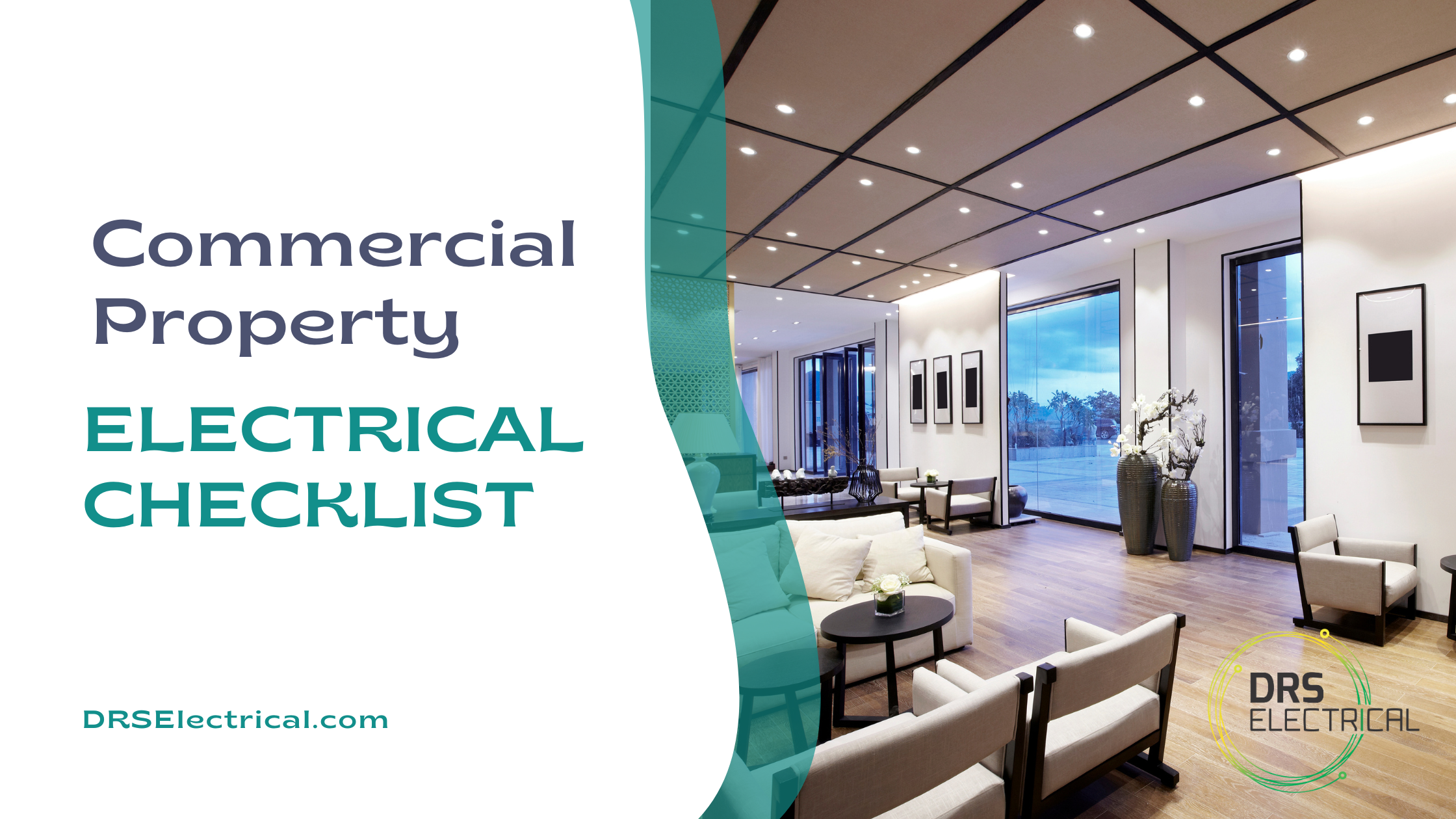
Commercial Property Electrical Maintenance Checklist
Whether you manage a hotel, a school, a golf club, or any commercial property, electrical safety and maintenance needs a proactive approach.
Here’s what every commercial property should have on its radar.
1. Your EICR Is Up to Date
An Electrical Installation Condition Report (EICR) is a great foundation for electrical maintenance and compliance for any commercial property. It assesses the condition of your fixed wiring and electrical installations, and highlights anything that needs attention.
Unlike residential properties, there is no requirement for an EICR to be conducted every 5 years or when there is a tenancy change. However, many business insurance providers require an EICR in order to maintain policy coverage.
For higher-risk environments like care homes or premises with heavy electrical loads an annual EICR would be advisable.
If you can’t put your hands on your last EICR, that’s your first action point.
2. Emergency Lighting Is Tested and Logged
Emergency lighting is non-negotiable. In the event of a power failure, it guides people safely out of the building. In a hotel corridor, a school assembly hall, or a golf club function room, that could mean hundreds of people.
Emergency lighting requires:
· Monthly flick tests
· Annual full discharge tests
· A written log of every test carried out
Many facilities fall short not because the lights don’t work, but because the paperwork isn’t in order. Both matter equally during an inspection.
3. Fire Alarm Systems Are Serviced Regularly
Your fire alarm system should be serviced by a competent engineer at least twice a year, with weekly call point tests carried out in-house and recorded in a logbook.
For schools, hotels, and leisure venues, fire alarm compliance is also closely tied to your fire risk assessment, so gaps here can have consequences beyond just the electrical side.
4. PAT Testing Is Carried Out on Portable Appliances
Any portable electrical equipment used on your premises, from the kettle in the staffroom to the lawnmower in the grounds should be subject to Portable Appliance Testing (PAT).
The frequency depends on the type of equipment and how it’s used, but the key point is that there should be a schedule, it should be followed, and records should be kept. A golf club with a fleet of buggies, or a school full of laptops and AV equipment, has a significant PAT obligation.
5. Your Distribution Boards Are in Good Condition
Distribution boards (fuse boards) are the hub of your electrical system. Older boards, particularly those with rewireable fuses rather than modern circuit breakers may not provide adequate protection and could be a liability.
Signs that a board may need attention include:
· Breakers that trip frequently
· Signs of heat damage or discolouration
· A board that’s overcrowded or has unlabelled circuits
· Boards that haven’t been inspected as part of an EICR recently
6. External Electrics Are Included in Your Checks
It’s easy to focus on what’s inside the building and overlook outdoor installations. For a golf club, this might mean lighting on pathways, power to outbuildings, or outdoor socket points. For a hotel, it could include car park lighting, signage, or EV charging points. For a school, external security lighting and caretaker outbuildings.
Outdoor electrics are exposed to the elements year-round and need regular inspection to ensure weatherproofing is intact and there are no safety risks.
7. You Have a Reliable Electrical Contractor on Call
Reactive electrical maintenance is inevitable. Things fail, circumstances change, and you need to know who to call. But the best commercial properties don’t just have a reactive relationship with their electrician. They have a planned maintenance schedule that keeps compliance ticking over and reduces the likelihood of an unexpected failure at the worst possible time.
Electrical compliance isn’t just about avoiding fines or failing inspections. Whether there’s a guest checking into your hotel, a child in a classroom, or a member enjoying a round at the golf club, they’re trusting that the environment is safe.
If you’re not sure where your property stands on any of the above, the best place to start is a conversation with a qualified commercial electrician.
DRS Electrical work with hotels, schools, golf clubs, and commercial properties across Surrey and the surrounding areas. Get in touch to discuss a maintenance plan or book your next inspection.
Back to all posts